
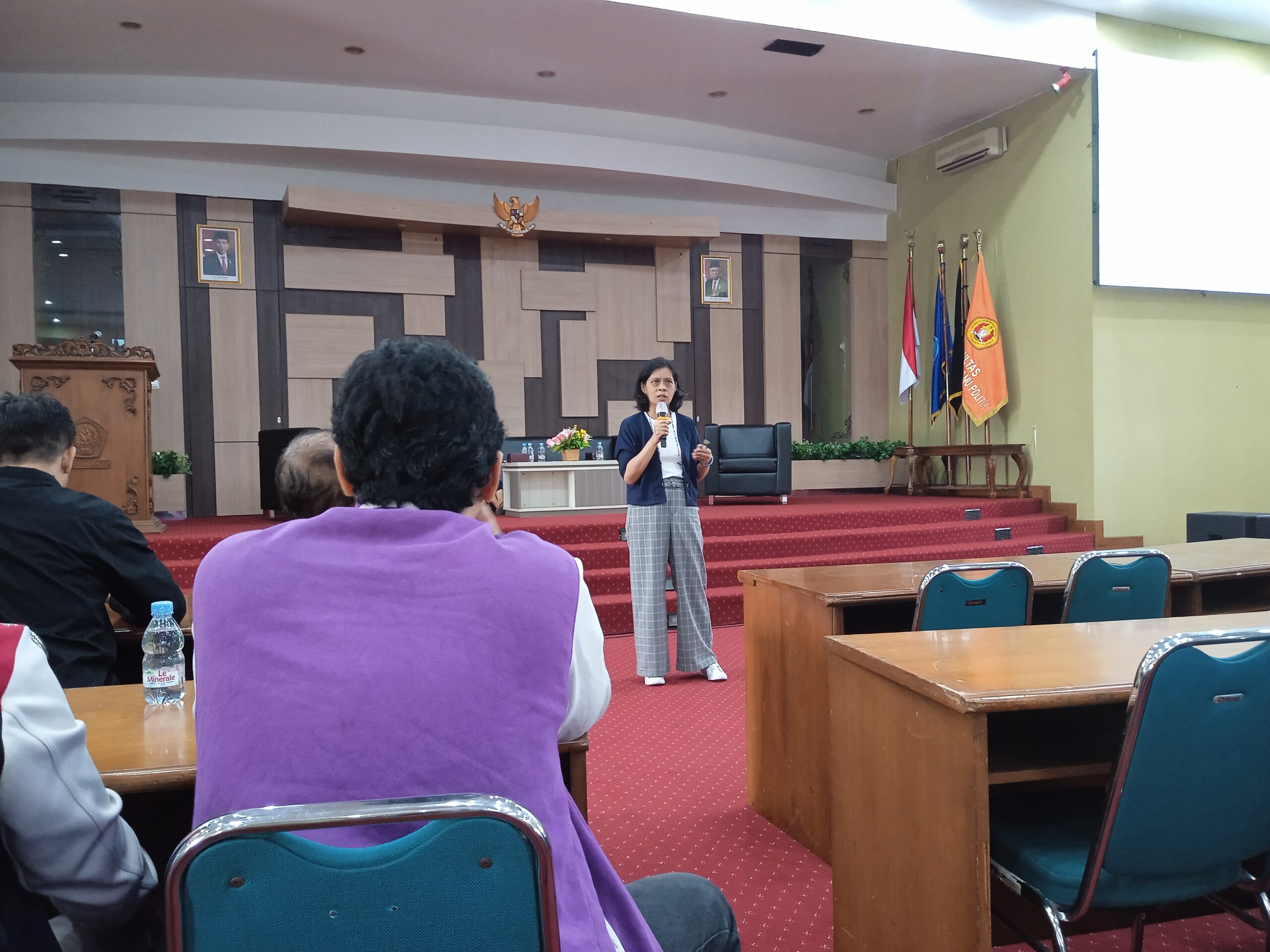
YOGYAKARTA – The seminar entitled “Repelling Disinformation and Hate Speech Insights from the Philippines” became an interesting topic discussed in the Visiting Professor seminar in the FISIP Seminar Room, Wednesday (21/6/2023). This material was delivered by Prof Maria Diosa Laboste from the Philippines. The topic was raised to raise public awareness about the dangers of disinformation and hate speech and invite all parties to play an active role in combating it.
Still with the same keynote speaker, Prof Maria enthusiastically delivered the material to the participants. According to her, this topic provided an opportunity to also think about the topic and provide an assessment of the insights of disinformation and hate speech that occurred in the Philippines.
“The election of Rodrigo Duterte in 2016 triggered an increase in information chaos in the country. Duterte gained a lot of support because of his promise to eradicate crime and corruption, but during his term, there were many cases of extrajudicial killings,” Prof Maria said.
Disinformation, according to Prof Maria, is at the intersection between “Misinformation” and “Malinformation”. Misinformation is false information spread without the intention to harm, while Malinformation is true information but spread with the intention of causing harm. Thus, Disinformation can be defined as false information that is deliberately shared for harmful purposes.
Fake news is also a problem faced by Filipino society. Its rapid spread in the digital age and social media has a negative impact on society and the democratic process. Efforts to recognise, challenge and counter the spread of fake news are important for the sustainability of accurate information and public trust in the media. Public education on critical information scrutiny and media literacy skills help counter the spread of fake news and build a more informed society.
Furthermore, hate speech is also an important issue for the Philippines. Hate speech interprets contempt, hatred, or prejudice against groups or individuals based on characteristics, such as race, religion, ethnicity, sexual orientation, or gender identity. It goes against the values of humanity, tolerance, and justice, and has the potential to cause violence, discrimination, and social tension. Addressing it involves a balance between freedom of speech and protection of individual and group rights, as well as effective law enforcement to prevent its negative impact on society and democratic life.
Ajeng Putri as a participant in this seminar revealed, “Very interesting material. Especially now that there is a lot of hate speech on social media and it is irresponsible. So, it is enough to add learning.”
Authors: Aradea Ibnu, Raihan Hafidh